
Six Unexpected, High-Value Insights for Creative & Marketing Leaders
We were at Creative Ops LA in November, taking in a full mix of sessions, panels, and conversations with some of the brightest operators, studio leads, and creative strategists in the industry. What surfaced was a set of deeper, structural themes that point to where creative operations is heading and what today’s teams need to thrive.
These weren’t the usual “be more efficient / embrace AI / collaborate better” takeaways. They were the human, foundational, and often unspoken lessons that showed up across presentations and conversations – from NASA’s broadcast engineers to Google’s Brand Studio to leaders at Coinbase, Balsam Hill, and Warner Music Group.
Here’s our take on the six insights that stood out most.
1) Creativity scales when you hide the process, not when you add more of it
One of the clearest themes was that the best creative operations teams make process feel invisible.
NASA runs incredibly complex creative, engineering, and broadcast workflows, yet the audience never sees the machinery behind the work. Their goal is simple: make the complex feel effortless.
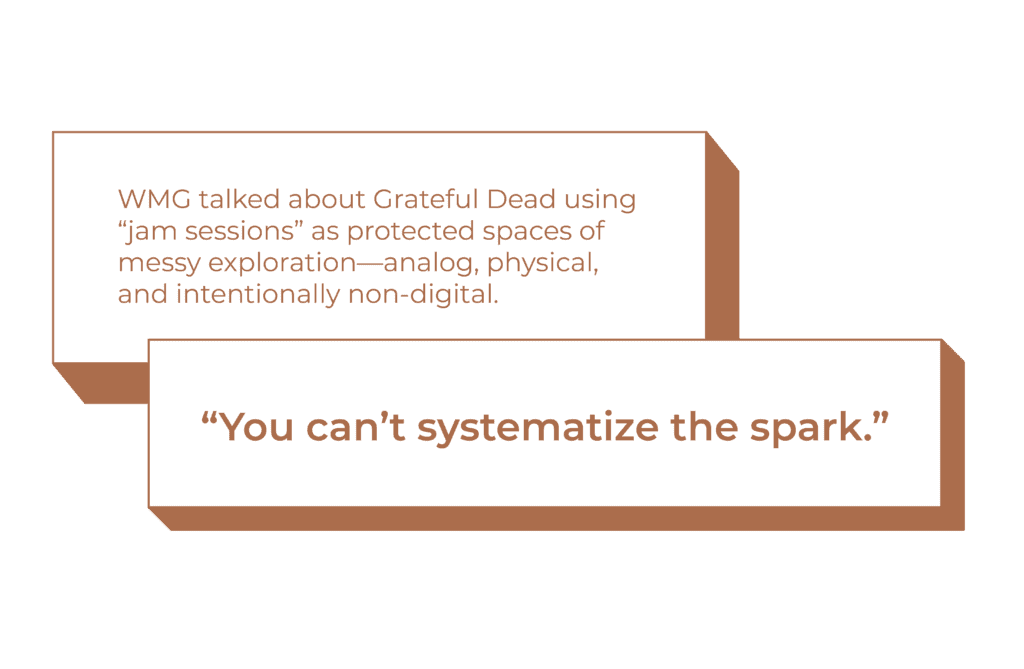
Another one of our favorites came from Gordan Thomas, Creative Director at Warner Music Group.
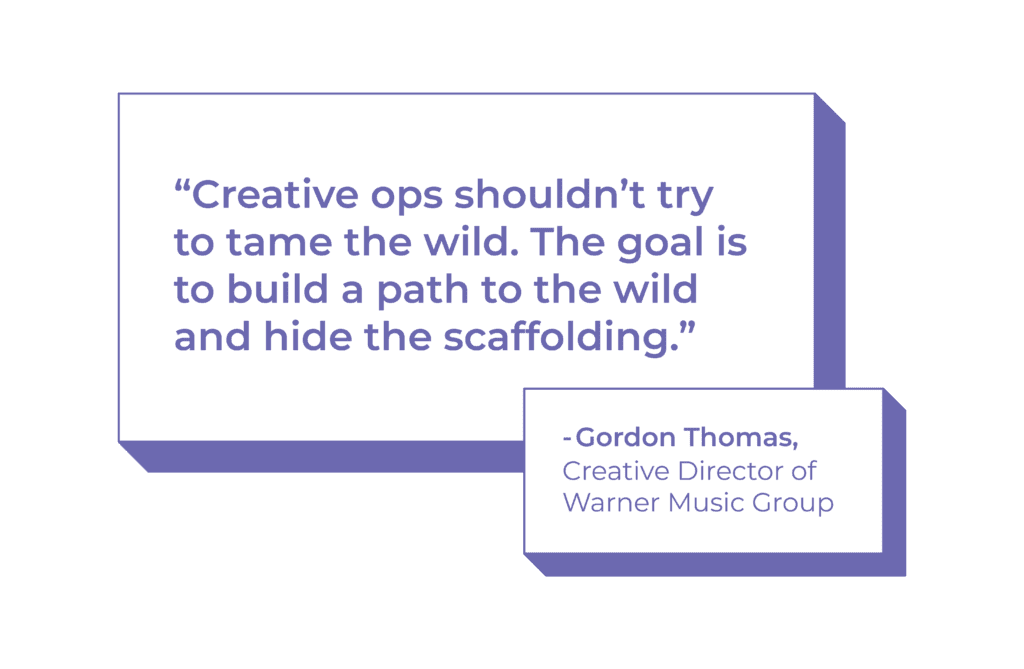
Google Brand Studio uses simple, predictable frameworks such as consistent weekly review blocks to create more flow, not more bureaucracy. Aquent Studios positions Creative Ops 2.0 as experience design where tools support humans rather than control them.
The Sandy read:
Creative ops works best when the structure is strong enough to support the work but light enough that no one feels the weight of it.
2) Constraints are becoming a competitive advantage
Throughout the Summit, constraints were framed as catalysts for creativity rather than limitations.
The folks at NASA said it best.
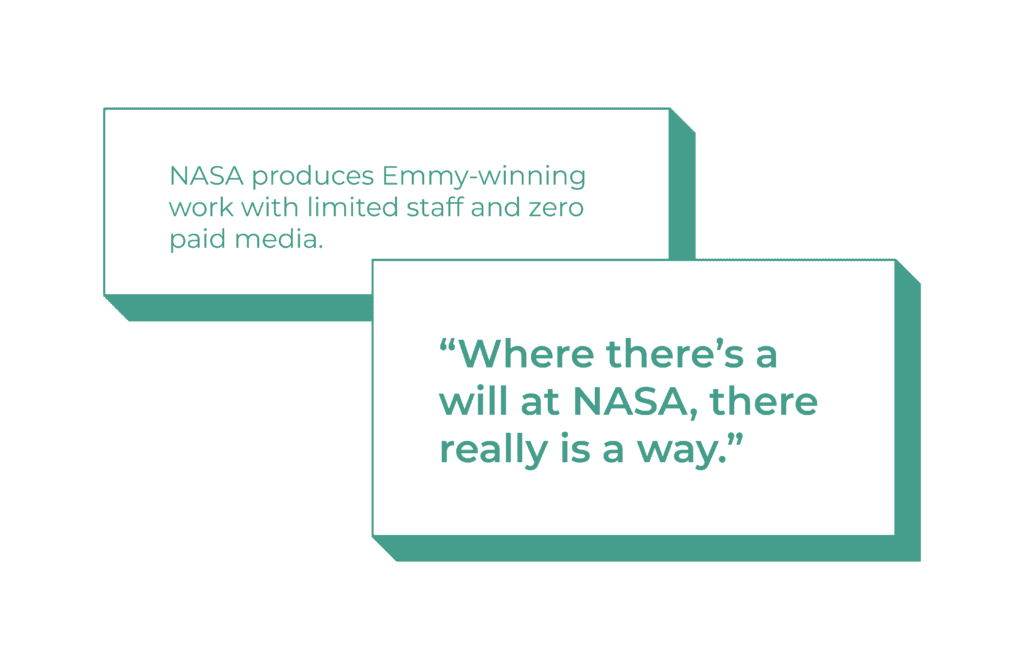
Liberty’s Mutual’s In-House Agency Copper Giants actually takes on external clients, on top of their In-House duties, but they cap the amount of extra work to protect creative bandwidth and preserve culture. Coinbase uses AI to cut unnecessary shoots and reinvest in what matters most. Balsam Hill redesigned workflows based on actual capacity, reducing burnout and improving creative focus.
The Sandy read:
Constraints force clarity. Clarity fuels originality.
3) Human connection is becoming the new luxury
As AI speeds everything up, human moments hold more value than ever.
- Loie Maxwell argued the most beloved brands win by elevating micro-moments of humanity, whether it’s Starbucks writing names on cups or CVS making loyalty feel rewarding.
- Author and former Apple CD Kevin Frank reminded everyone that gratitude, one-to-ones, and emotional presence create far more cultural lift than any tool.
- T. Alex Blum emphasized that brand stories must create meaning for people, not just fill channels.
- Even Coinbase, one of the most AI-forward teams on stage, anchored its best work in painstaking human craft.
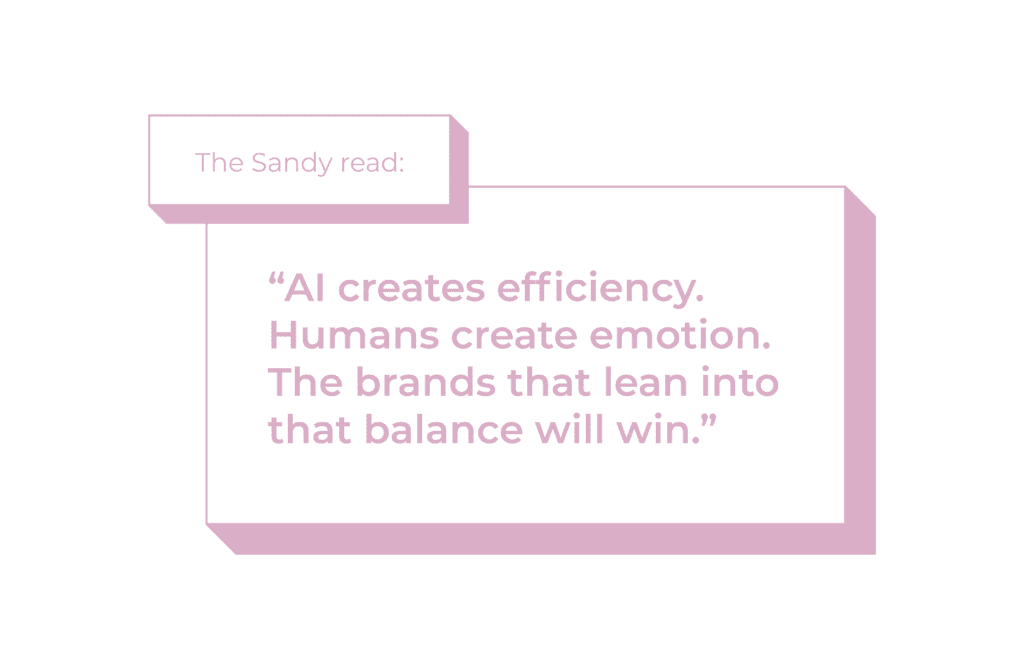
4) Creative ops leaders are becoming architects, not process owners
Across the board, leaders said their role is shifting.
They are moving from managing workflows to shaping the environment where creativity happens.
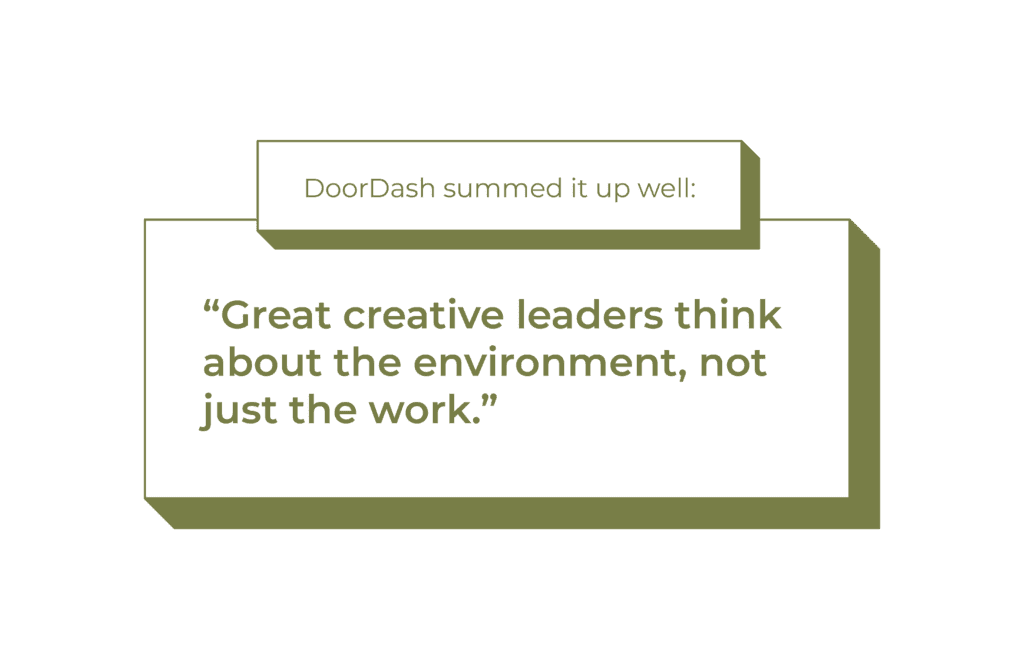
Aquent talked about orchestrating human and machine collaboration while keeping people in charge. Gordon Thomas highlighted the need to protect creatives from high-pressure stakeholders to preserve psychological safety.
The Sandy read:
Creative ops is no longer traffic management. It is clarity, culture, and care.
5) AI is not a toolset. It is a redistribution of creative energy
The most mature teams are not using AI to replace creatives. They are using it to shift how creative time is spent.
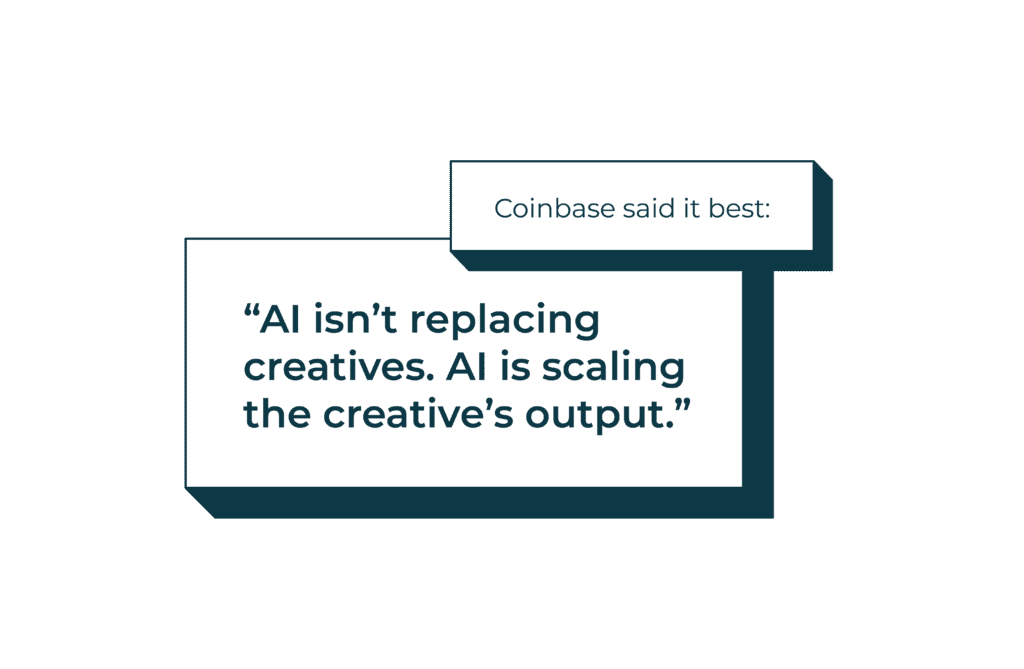
Google cautioned that AI should not lead storytelling without human emotional oversight. Alex Blum explained why narrative still requires human intention, conflict, and purpose.
The Sandy read:
The value of AI comes from freeing humans to spend more time on strategy, ideas, story, and innovation.
6) Creative teams need rituals, not just processes, to stay inventive
This is one of the most overlooked but powerful themes.
- Google hosts “Neighbor’s Week”—no deliverables, just cultural intake and creative play.
- Balsam Hill built team rituals (awards, celebrations, production calendars as “love language”).
- Copper Giants prioritizes “joy as the center of everything we do” and a no-assholes ethos.
The Sandy read:
Processes keep teams aligned. Rituals keep teams inspired. The best creative cultures invest in both.
Where this leaves us and how Sandy can help
The throughline across Creative Ops LA was clear. Creative teams are redefining how work gets done. The future belongs to teams that blend human connection with smart systems, integrate AI without losing story or intent, and design environments that protect creative energy.
This is the foundation of Sandy’s Elastic Teams model. We help creative and marketing leaders bring in the right mix of specialized, AI-ready talent so they can scale thoughtfully and stay focused on the work that moves the business forward.
If you’re rethinking how your team operates in 2026, we’d love to help you build a more resilient, flexible, and future-ready creative team.
Click here to connect.